

How to Train a Guard Dog for Personal Protection (5 Tips)
Many people who worry about personal safety start looking online for a k-9 guard dog for sale. The idea of having a loyal dog that can protect you may sound comforting, especially if you walk alone at night or live in an area where security is a concern. However, owning and training a protection dog is very different from having a regular family pet.
A true protection dog is trained to react to threats, follow strict commands, and stay focused on its handler. This type of training takes time, patience, and responsibility. Before deciding if this path is right for you, it is important to understand what protection dog training involves and how it can affect your dog’s behavior and personality.
Below are some important things to know if you are thinking about training a dog to protect you.
Training a dog for protection starts with strong obedience and social skills. Without these foundations, protection training can become unsafe.
Teaching Basic Obedience Commands
Before any protection work begins, your dog must learn basic commands. These include sit, stay, come, down, and heel. Your dog should follow these commands every time you give them. For a Cavapoo, consistent obedience training can also help improve focus and responsiveness in different situations.
A protection dog must also understand commands such as “bark” and “leave it.” These commands help you control your dog in tense situations. If your dog cannot follow simple instructions, protection training should not continue. Strong obedience is the backbone of all advanced training.
Proper Socialization Is Essential
Socialization means helping your dog become comfortable around people, places, and everyday situations. A dog that is well socialized is confident instead of fearful.
You can start this by taking your dog on walks in different environments. Let them see people passing by, hear new sounds, and explore unfamiliar places. This helps them understand what normal activity looks like.
A protection dog should not see every stranger as a threat. Instead, the dog should stay calm and only react when a real danger appears.
Teaching Your Dog to Bark on Command
A loud, confident bark can often stop trouble before it begins. In many cases, a barking dog is enough to make a suspicious person walk away.
Training your dog to bark on command helps you control when the dog should warn others. At the same time, your dog must learn when to stop barking. Teaching a “quiet” or “stop” command helps prevent constant noise and keeps peace with neighbors.
Barking is a natural behavior for many dogs, but guiding when and how it happens is an important part of training.
Advanced Protection Training and Important Considerations
After a dog learns obedience and social behavior, some owners choose to continue with advanced protection training. This step requires caution and responsibility.
Teaching Defensive Behavior
In controlled training situations, a helper may act as a stranger approaching the dog and handler. When the dog barks or stands alert, the helper backs away to show the dog that its warning worked.
This builds confidence in the dog and teaches it to stand between the owner and a possible threat. In many cases, this level of training is enough. A dog that appears confident and protective often discourages danger without any physical action.
Bite Training and Its Risks
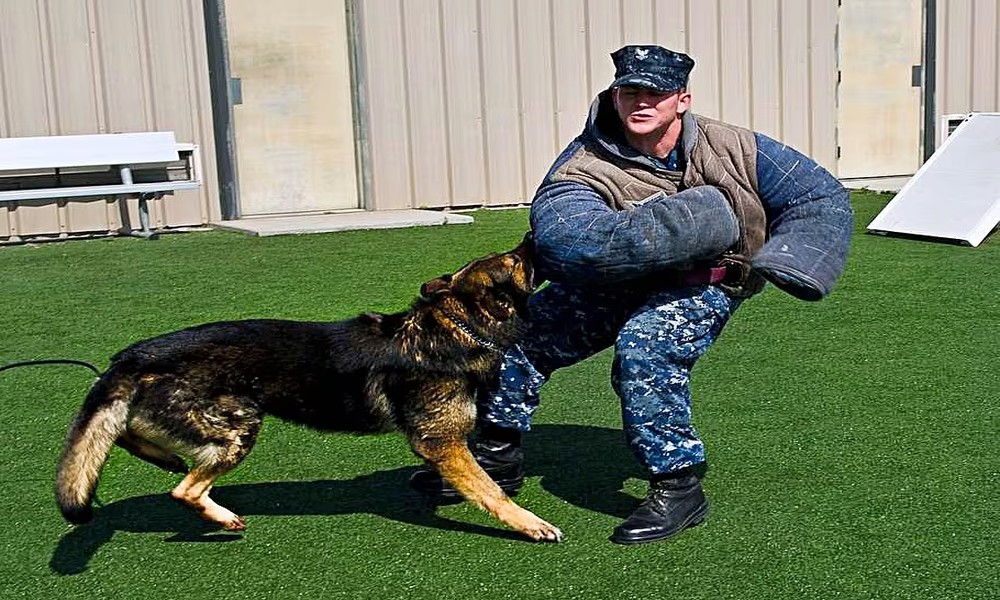
Some protection programs include bite training. During this training, the dog learns to bite a padded sleeve or protective gear worn by a trainer.
While this training can create a strong protection dog, it also increases responsibility for the owner. A dog trained to bite must always remain under control. If a trained dog bites the wrong person, the owner could face legal problems or serious consequences.
Because of this risk, many trainers suggest stopping at alert and bark training rather than teaching attack behavior.
Teaching the Dog to Stop on Command
One of the most important lessons for a protection dog is learning to stop immediately when told.
If a dog cannot release a person or back away when commanded, the situation can quickly become dangerous. Commands like “leave it” or “back off” must work every time.
This control protects both the dog and the owner from accidents or misunderstandings.
Choosing the Right Breed and Personality
Not every dog is suited for protection work. Some breeds naturally show protective instincts, while others are better known for being friendly companions.
Dogs often used in protection training include German Shepherds, Belgian Malinois, and Rottweilers. These breeds are known for intelligence, confidence, and loyalty. Smaller dogs or very relaxed breeds may not have the personality needed for this type of work.
Even within the same breed, each dog has its own personality. Some dogs naturally show protective behavior, while others are happier simply being family pets.
Final Thoughts
Owning a protection dog is a serious responsibility. While the idea of safety may lead someone to search for a k-9 guard dog for sale, it is important to remember that training and proper care are just as important as the dog itself.
A well-trained protection dog should still be calm, loyal, and safe to live with. The goal is not to create an aggressive animal but to develop a confident companion that can respond to danger when necessary.
For many people, a well-trained dog that barks at strangers and listens to commands may provide all the protection they need while still being a loving member of the family.