
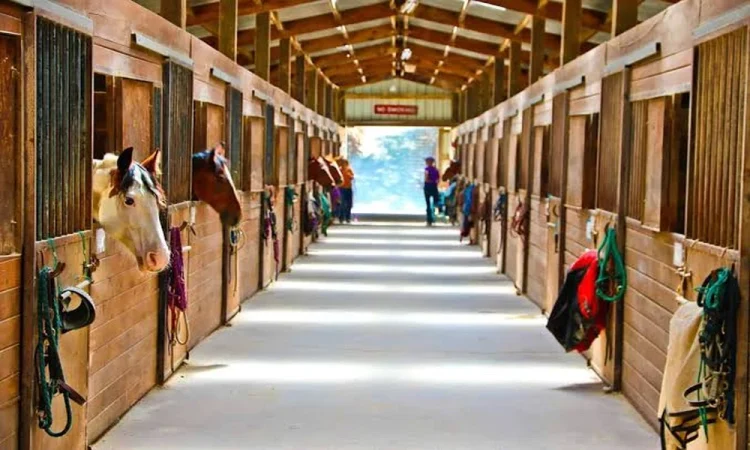
Colorado has a way of making horse owners feel lucky, with mountains on the horizon and trails that run for miles. Finding a good place to keep a horse is a different story, though, and it often takes more patience than people expect. A new arrival in the state might spend a whole weekend driving between barns with a muddy notebook on the passenger seat, comparing stalls, fences and feed rooms. It’s tiring work, but most owners agree it’s worth every mile once the right yard turns up.
Why Colorado Is Its Own Kind of Horse Country
The climate shapes almost everything about boarding here. Winters can be sharp and windy along the Front Range, while summers bring dry heat, sudden afternoon storms and the occasional hailstorm that sends everyone running for the barn. A rider who moved from a soft, rainy county elsewhere might be surprised the first January morning she finds the water trough frozen solid. Good stables plan for all of this with heated waterers, sturdy run-in sheds and sensible turnout routines. Horses, it turns out, cope with the weather far better than their owners do.
The Main Types of Boarding
Full Board
Full board covers most of the daily work. Staff handle feeding, mucking out, turnout and blanketing, so the owner can simply arrive and ride. It suits people with long working hours, such as a nurse finishing a twelve-hour shift who still wants half an hour in the saddle before dark. The cost is usually higher, of course. For many owners, the peace of mind earns its keep.
Partial and Self-Care Board
Partial board splits the jobs between the owner and the yard, while self-care leaves most of the graft to the owner. These options can work well for confident horse people who enjoy the routine. A retired teacher might happily turn up at seven every morning with a flask of tea and a wheelbarrow, and treat the chores as the best part of her day. It’s hard work, mind, and a wet spring can turn a paddock into a bog remarkably quickly.
Pasture Board
Pasture board keeps horses out in a field with shelter, often in a small herd. It suits many easy-going horses and tends to cost less than a stall. A shy mare might come out of her shell within a month once she has a couple of steady companions. Some horses are simply happier with a sky above them than a roof.
What Owners Look For in a Stable
Safety comes first. Solid fencing, well-kept gates and clean water are the basics, and a careful owner will notice a loose board or a rusty nail within minutes of arriving. A family buying a first pony for their daughter might spend longer inspecting the tack room than the stalls, and that’s no bad thing. Small details often reveal how a place is really run.
People matter just as much as facilities. A friendly barn manager who answers messages quickly can make the difference between a stressful year and an easy one. One owner remembers the stable hand who texted a photo of her horse dozing in the sunshine after a minor vet visit, just so she wouldn’t worry at work. Moments like that build trust in a way no brochure can. The best yards feel a bit like a second family.
Location rounds out the list. A barn forty minutes away can feel close in July and impossibly far on a snowy evening in February. A quick stop on the way back from the office soon becomes a cherished habit. Distance, in the end, decides how often a horse gets seen.
Fort Collins and Northern Colorado
Fort Collins sits close to open land, foothill trails and a strong farming community, which gives it a relaxed, outdoorsy feel. A student at the local university might keep a horse nearby and ride between lectures, swapping textbooks for a hay net on a Friday afternoon. Demand for good stalls can be high, so it often pays to start looking early. Owners who browse the Available Horse Boarding in Fort Collins tend to get a clearer sense of what the area offers before they ever pick up the phone.
The surrounding countryside adds plenty of choice, from large training centres to quiet family yards with a handful of horses. A couple relocating from the city might fall for a modest barn with a view of the foothills and a resident cat asleep on the hay bales. It isn’t always the fanciest place that wins. Sometimes it’s the one that simply feels right.
Introducing Horse Boarding Finder
Searching for stables has traditionally meant scattered listings, word of mouth and a fair bit of guesswork. Horse Boarding Finder takes a different approach. It’s a free community service that brings local stable searches together on a single interactive map, so owners can see options across an area at a glance. Someone sitting at the kitchen table on a Sunday evening can scan the map, note a few likely barns and plan visits for the week ahead. For anyone starting fresh in a new town, that’s a real relief.
The community side of the service also makes sense in the horse world, where recommendations have always travelled from rider to rider. A newcomer might hear about a lovely yard from a stranger at the feed store and then find it on the map later that day. Owners looking more broadly at Horse Boarding can explore the wider map in exactly the same way. It’s a small tool that takes a real weight off the search.
Visiting Before Committing
No map can replace a proper visit. Owners usually learn the most by turning up, watching the morning routine and chatting with other boarders. A seasoned rider might linger by the fence just to see how calm the horses look at feeding time. Questions about vet access, farrier visits and emergency plans are all fair game, and a good stable will be happy to answer them.
Final Thoughts
Horse boarding in Colorado comes with real challenges, from frozen troughs to long drives on icy roads. It also offers wide skies, generous trails and a community that adores its animals. With a sensible checklist, a few honest visits and a clear view of the local options, owners can find a place where their horse will thrive. The search takes effort. The first easy ride on a crisp autumn morning usually makes it all worthwhile.