
Cats are naturally prone to dehydration. Unlike dogs, they evolved from desert dwelling ancestors and retain a low thirst drive, which means many cats drink less water than their bodies actually need. Over time, that gap has real consequences for urinary and kidney health, two of the most common problem areas veterinarians see in aging cats.
That biological quirk is the starting point for Pawira’s stainless steel water fountain, a product built around a simple premise: if cats are more likely to drink moving, filtered water than water sitting still in a bowl, then the design of the fountain itself becomes a health tool, not just a convenience item.
Why Material Choice Affects More Than Durability
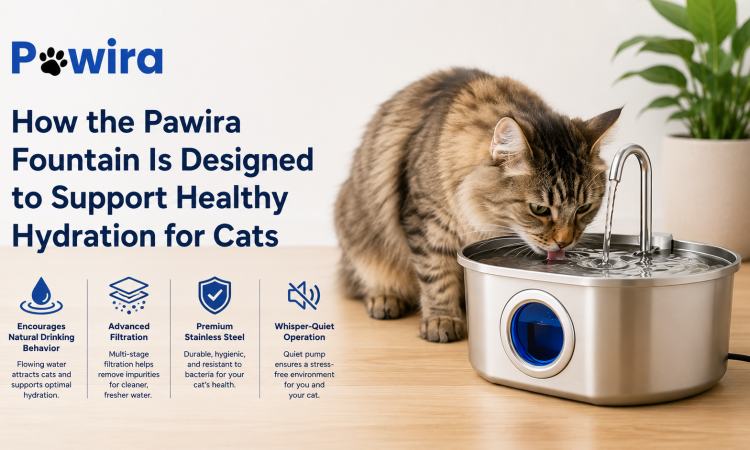
Most cat fountains on the market are made of plastic, largely because it’s cheap to manufacture. But plastic has a drawback that isn’t visible on a store shelf. At a microscopic level, plastic surfaces are porous, which gives bacteria and biofilm a place to take hold. That’s part of why plastic fountains tend to develop a slimy film within days of use and require frequent scrubbing to stay sanitary.
Pawira’s fountain is built from 316 surgical grade stainless steel, a higher spec than the 304 steel used in many competing fountains and the same grade commonly used in medical and food service equipment. Steel’s smoother surface gives bacteria less to grip, which slows buildup and makes cleaning less frequent. It also holds up physically. Unlike plastic, steel doesn’t scratch, cloud, or crack with repeated washing over years of use.
Filtration Built Around Water Quality, Not Just Water Movement
A pump alone only keeps water circulating. What actually determines whether that water is safe and appealing to drink is the filtration behind it. Basic fountains often rely on a single filter stage, which leaves gaps in what gets removed from the water.
Pawira uses a triple filtration cartridge that combines a pre-filter, activated carbon, and ion exchange resin, with each stage targeting a different category of contaminant. The fountain also includes a UV sterilization element built into the pump housing, which runs continuously during operation. That layered approach is closer to systems used in aquarium and water treatment equipment than what’s typically found in a countertop pet fountain.
Designing for a Cat’s Sensitivity to Noise
Cats are cautious animals, and unfamiliar sounds can be enough to make one avoid a fountain altogether, regardless of how well it filters water. A pump that hums, clicks, or buzzes at a noticeable volume can undo the point of the product if the cat simply won’t approach it.
Pumps rated under 20 decibels are generally considered quiet enough not to disrupt a household, including at night. Pawira’s 5V pump is engineered to fall within that range, a detail that matters more in practice than it might seem on a spec sheet.
Sizing the Fountain to the Household
Hydration needs don’t scale the same way across households. A single cat drinking from a small reservoir is a different scenario than five cats sharing one fountain, and a unit that needs refilling daily in a multi-cat home loses much of its convenience.
Pawira’s fountain holds 3.2 liters, or about 108 ounces, putting it on the larger end for a countertop design. That capacity is intended to reduce how often the fountain needs to be topped off, particularly in multi-cat households where demand on a single water source is higher.
Filter maintenance follows a similar logic. Pawira recommends replacing filters every two weeks and includes eight filter sets with each unit, enough to cover roughly four months before a separate purchase is needed.
What Happens When Parts Wear Out
Any product with a motor and moving parts will eventually need a repair or replacement, and how a company handles that moment says as much about the product as the initial design does. Pawira backs its fountain with a lifetime warranty on parts and workmanship, with replacements handled directly through the company’s email support rather than a third party retailer.
That kind of coverage shifts long term risk away from the buyer, an approach more common in premium appliances than in pet products, where warranties are often limited to a year or less.
A Design Approach Aimed at a Specific Problem
None of these choices exist in isolation. Cats already have a biological tendency to under-drink, and every design decision in Pawira’s fountain, from the steel used in its build to the number of filtration stages to the pump’s noise output, is aimed at removing a reason a cat might avoid drinking from it.
Whether a fountain works for a specific cat still depends on individual habits and preferences, something no product can fully guarantee. But the underlying logic behind Pawira’s design reflects a straightforward read of the problem it’s trying to solve: cats are unlikely to change their instincts, so the fountain has to change how easy and appealing it is for them to drink.
How the Pawira Water Fountain Measures Up Against These Criteria
Putting the specs together: 316 stainless steel, triple filtration with UV sterilization, sub-20dB pump, 108oz capacity, and a lifetime warranty. On paper, that’s a fuller feature set than most fountains in its category, which tend to offer stainless steel or multi-stage filtration, but rarely both alongside UV sterilization.
That doesn’t automatically make it “the” highest-rated fountain on the market. That’s a moving target, and any brand claiming an absolute number-one spot without independent, dated testing data should be read skeptically. What can be said accurately is that Pawira’s spec sheet checks the boxes that independent buying guides consistently flag as the difference between a fountain that lasts and one that doesn’t.
What Customer Feedback Says About Pawira
Pawira’s own site lists a 4.9-star average across roughly 1,100 reviews, and reviews on third-party platforms echo several recurring themes: cats transitioning well to the fountain, the pump running quietly, and responsive customer service when a part needs replacing.
The honest recommendation, for Pawira or any fountain, is the same one that applies to any online purchase: check reviews across more than one platform rather than relying on a single storefront’s rating, and read the return and warranty policy before buying.
Built to Earn a Top Rating
If the criteria that matter to you are steel construction, thorough filtration, quiet operation, and a no-questions-asked warranty, the Pawira water fountain is built to that specification. If your priority is the lowest possible upfront cost and filter replacement isn’t a concern, a simpler plastic pet water fountain may be a better fit for your budget, even if it asks for more frequent cleaning in return.
FAQs
What makes a cat water fountain “top rated” beyond its star review score?
ANS: Build material, filtration stages, pump noise level, reservoir capacity, and warranty coverage are the physical factors that predict long-term satisfaction better than a star average alone.
Is a stainless steel cat fountain really better than a plastic one?
ANS: For hygiene and durability, generally yes. Steel resists biofilm buildup better than porous plastic and doesn’t degrade with repeated dishwasher cleaning the way plastic can.
Does a louder pump mean a more powerful fountain?
ANS: Not necessarily. Pump noise is more often a function of motor and housing design than raw water flow. A well-designed pump can move water efficiently while staying under 20 decibels.
How much does filtration actually matter if my cat already drinks fine from a bowl?
ANS: Filtration affects water taste and safety more than whether a cat drinks, but cats are sensitive to taste and smell, and cleaner-tasting water is one of the more common reasons cats increase their intake after switching to a fountain.